




Introduction
AI Recruitment Statistics: As companies receive a large number of job applications today, Artificial Intelligence is helping make the hiring process faster and easier. AI helps by quickly sorting resumes, screening candidates, and saving time. It can also chat with applicants and give useful insights to recruiters.
This makes hiring faster, smarter, and fairer. As companies move towards digital tools, AI is becoming an important part of recruitment. It helps organizations find the right talent easily and stay ahead in a competitive job market.
Editor’s Choice
- The global AI recruitment market is expected to reach USD 1,119.8 million by 2030.
- In 2025, the global AI recruitment market for software solutions was USD 370 million, and for services was USD 247 million.
- At the start of 2026, North America holds the largest share of the market, capturing 45% of the total.
- Around 89% of HR professionals using AI say it significantly saves time or increases efficiency.
- 60% of companies now use AI to manage talent, helping them find, keep, and develop employees.
- 35% of talent acquisition professionals who use or test AI say it saves time in candidate screening.
- 87% of companies use AI in their hiring process.
- 35% of recruiters worry AI may overlook candidates with unique skills.
- About 20% of Black adults think AI will increase racial bias in hiring.
- 56% of recruiters use AI tools to find candidates on social media and job boards.
- 98% of hiring managers say using AI has greatly improved how quickly and efficiently they can hire candidates.
- AI helps companies find potential candidates, with 81% of recruiters using it for sourcing.
- 79% of recruiters believe AI will soon be able to make hiring and firing decisions.
AI Recruitment Market Analysis

(Reference: demandsage.com)
- The global AI recruitment market is expected to reach USD 1,119.8 million by 2030.
- The enterprise AI recruitment sector is projected to grow at a CAGR of 6.78% from 2023 to 2030.
- According to Demand Sage, around 44% of recruiters cite saving time as a primary reason for using AI in hiring.
- 35% of recruiters are concerned that AI may overlook candidates with unique skills.
- 87% of companies currently use AI in their recruitment process, and 24% use AI specifically to hire talented employees.
- 67% of hiring decision-makers say AI’s main benefit is saving time.
- Around 58% of recruiters find AI most useful for sourcing candidates.
- 66% of U.S. adults would not apply for jobs that use AI for hiring.
- 37% of Americans believe racial or ethnic bias is a major hiring issue.
- 35.5% of small and medium-sized businesses allocate part of their budgets to AI recruiting tools.
- 44% of HR executives have already started using AI for hiring.
By Component Type

(Reference: datarefs.com)
- In 2025, the global AI recruitment market for software solutions was USD 370 million, and for services was USD 247 million.
- By 2035, the software segment is projected to grow to USD 800 million, while services are expected to increase to USD 489 million.
By Region

(Reference: datarefs.com)
- At the start of 2026, North America holds the largest share of the market, capturing 45% of the total.
- Europe follows with a thirty percent (30%) share, while the Asia-Pacific region accounts for twenty percent (20%).
- The Middle East and Africa together hold a smaller share of five percent (5%).
Current State Of AI In Recruitment, 2026
- 60% of companies now use AI to manage talent, helping them find, keep, and develop employees.
- About 65% of recruiters rely on AI tools to speed up sourcing, screening, and candidate matching.
- The Recruiter Copilot report further stated that around 30% of organizations use AI in their recruitment campaigns to better target and connect with qualified candidates.
- Roughly 35% of companies report measurable improvements in hiring quality and speed due to AI, according to CareerTrainer.
- Most companies now use AI in HR, with 88% adopting it widely, 67% applying it daily in recruitment, 58% investing heavily, and 53% seeing more successful interviews.
Real Wins With AI In Recruiting
- The biggest benefit of AI in recruiting is saving HR teams time.
- According to Disher Talents, around 89% of HR professionals using AI say it significantly saves time or increases efficiency.
- Many companies report hiring 30% to 50% faster, and some high‑volume teams see improvements up to 75% when they redesign work with automation.
- Korn Ferry used AI to cut admin work, screen more candidates, boost sourcing by 50%, and reduce time‑to‑interview by 66%.
- Unilever cut time to fill entry‑level jobs by 90% and reduced recruiter review time by 75%.
- Nestle uses automation to save around 8,000 admin hours each month.
- AI can also lower hiring costs when used strategically; some HR teams in North America report up to 40% lower costs across parts of the process.
- Successful use of AI has reduced cost‑per‑hire by up to 30%.
AI in Recruitment Statistics By Screening, Assessment, And Workflow
- According to imocha.io, 35% of talent acquisition professionals who use or test AI say it saves time in candidate screening.
- 26% report that AI helps them focus more on evaluating candidate skills.
- 74% agree AI can assist interviewers by checking how well applicants’ skills match the job.
- Two-thirds of all respondents believe AI can reduce or prevent cultural biases during interviews.
AI Adoption By Recruiters And Companies
- DataRefs report further stated that 87% of companies use AI in their hiring process.
- 99% of Fortune 500 companies currently use AI recruitment methods.
- 65% of recruiters also use AI in hiring.
- 89% of HR professionals believe AI will improve the application process.
- More than 73% of companies plan to invest in recruitment automation in 2026.

(Source: twinstrata.com)
- 35% of recruiters worry AI may overlook candidates with unique skills.
- 66% of job seekers would avoid roles that rely heavily on AI screening.
- 35.5% of small and medium-sized businesses allocate a portion of their recruitment budgets to AI tools.
- 44% of HR leaders have started using AI in hiring processes.
- Meanwhile, .29% of HR executives report full integration of AI in recruitment systems.
- 87% of companies now use some form of AI in hiring, showing wide industry adoption.
- According to Demand Sage, AI investment has reached USD 1.5 trillion and could grow to USD 2 trillion by 2026.
- 24% of companies use AI to hire top talent.
- As per Virtual Assistant reports, around 93% of recruiters plan to increase their use of AI in 2026.
AI Adoption Across Recruitment Stages
| Stages | Adoption Statistics |
| Candidate Sourcing | 81% of recruiters use AI to find passive candidates; 74% of organizations use AI to develop their talent pipelines. |
| Resume Screening | 73% of organizations use AI-powered resume parsing for initial screening. |
| Chatbots & Candidate Communication | 68% use AI chatbots for FAQs. |
| Interview Scheduling | 62% rely on AI chatbots for scheduling interviews. |
| Video Interview Analysis & Assessment | 56% use AI for video interview analysis; 46% use AI for skills assessment scoring. |
By Regional Cost Reduction
- According to TwnStrata, North America sees the highest cost reduction from AI in recruitment at 40%.
- Europe achieves about 36% cost savings, while Asia-Pacific experiences 25% reduction in hiring costs.
- The Rest of the World shows a 20% decrease in recruitment expenses.
AI Tools And Applications In Recruitment
- The WeCP report further stated that 56% of recruiters use AI tools to find candidates on social media and job boards.
- 41% of companies use AI chatbots to answer candidate questions and schedule interviews, improving engagement and reducing manual work.
- iMocha also mentioned that around 90% of employers use automated systems to filter or rank applications before human review.
- 65% of employers use AI to categorize candidates as “ideal” or “non-ideal” based on skills, experience, and fit.
- 37% of recruiting teams are exploring or using generative AI to assist with tasks.
- These teams report saving about 20% of their weekly work hours through AI.
Reasons People Avoid Jobs Using AI In Hiring
| Category | Reason | Share |
| Human Factor Concerns | Lack of human touch | 44% |
| Worry about AI making mistakes | 10% | |
| Lack of trust in AI | 5% | |
| Understanding and Fairness Issues | Fear of personal disadvantages | 4% |
| Concern about bias or unfair treatment | 3% | |
| AI is not well understood | 3% | |
| Other Concerns | Belief AI harms company values | 2% |
| Potential for AI misuse | 1% | |
| Technology isn’t ready | 1% | |
| Depends on the situation | 1% | |
| Other reasons | 4% |
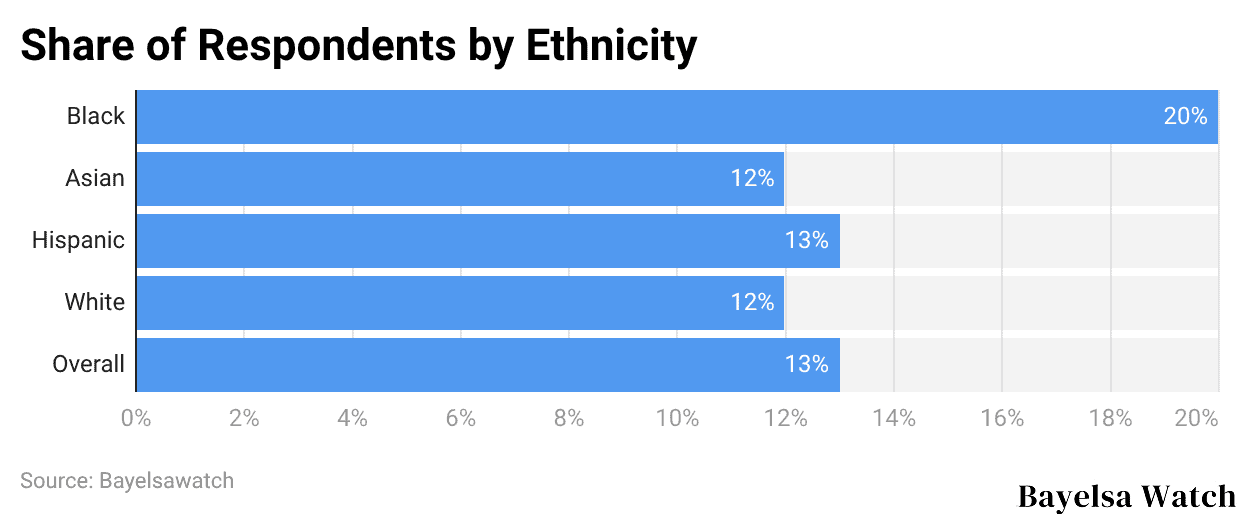
Perception Of AI Increasing Racial Bias In Hiring In The United States
(Reference: demandsage.com)
- About 20% of Black adults think AI will increase racial bias in hiring.
- Around 12% of Asian adults and 13% of Hispanic adults share the same concern.
- Nearly 12% of White adults believe AI will worsen bias, with the overall average across all adults at 13%.
AI Recruitment Impact Across Companies
| Company | Details |
| Mastercard | 88% of interviews scheduled within 24 hours, scheduling 85% faster, the talent community grew from under 100K to over 1 million, and 900% more candidate profiles collected. |
| Electrolux Group | 84% higher application conversion, 51% fewer incomplete applications, time-to-hire 9% faster, and 78% time saved with AI scheduling. |
| Kuehne+Nagel | Internal conversion 22% higher, time-to-fill 20% faster, 74% employee satisfaction, and 500 internal hires were completed. |
| Bon Secours Mercy Health | External hires up 28%, nursing hires up 31%, and early graduate hires up 37%. |
| Brother International | Completed applications up 140%, 40% more job seekers, and time-to-fill 25% faster. |
| Stanford Health Care | 250K interactions in 6 months, 11K+ leads, recruiter workload reduced from approximately 50/week to 1–2, and days-to-offer reduced 41%. |
| Thermo Fisher Scientific | 46% internal hiring rate, and exceeded the internal hiring target of 40%. |
AI Recruitment Performance Metrics
- A report published by limelightdigital.co.uk stated that 98% of hiring managers say using AI has greatly improved how quickly and efficiently they can hire candidates.
- 89% of HR professionals recognize that AI helps save time or boost efficiency.
- Recruiters using AI-assisted messaging are 9% more likely to hire high-quality candidates.
- Companies using AI in hiring report up to a 25% faster time-to-hire.
- 70% of talent acquisition professionals say AI saves time.
- About 33% of talent acquisition professionals believe AI will help improve the quality of hires in the future.
Process Of Using AI In Hiring Statistics
- According to DataRefs, AI helps companies find potential candidates, with 81% of recruiters using it for sourcing, 73% for reviewing resumes, and 68% for conversing with candidates via chatbots.
- Automation makes organizing interviews easier, with 62% of companies using it for scheduling, 56% for analyzing video interviews, and 46% for testing skills.
Cost, Speed, and Efficiency Benefits
- Companies using AI recruitment tools have reported reducing their hiring costs by 30%-40%.
- AI helps speed up the hiring process, cutting time-to-hire by up to 50%; resume screening can drop from 10 days to 2 days, and interview scheduling from 5 days to 1 day.
- These improvements increase candidate satisfaction by 30% and improve the overall quality of hires by 40%.
Key Benefits And Future Impact Of AI In Recruitment
- 79% of recruiters believe AI will soon be able to make hiring and firing decisions.
- 68% of recruiters say AI can help reduce bias, which is important because 48% of hiring managers admit they have some form of bias.
- 44% of recruiters use AI mainly to save time in hiring.
- 41% of recruiters find AI provides useful insights, and 39% say it simplifies their work.
- Overall, AI is seen as a tool that can improve fairness, save time, and support better decision-making in recruitment.
Conclusion
AI is changing how companies hire by saving time, finding good candidates, and supporting fair decisions. While AI can do many tasks, human judgment is still needed to make the best choices. When used in the right way, AI helps recruiters, not replaces them. In the future, smart use of AI will help companies build strong teams and stay competitive.
FAQ
AI is used for resume screening, candidate matching, chatbots for communication, interview analysis, and predicting candidate success.
It saves time, reduces manual work, improves hiring accuracy, and helps reduce bias.
Many companies, such as LinkedIn, IBM, and Amazon, use AI tools in hiring.
It is software that uses AI to assist with hiring tasks such as screening, matching, and communication.
Costs vary, but it can save money in the long run by improving efficiency.

Sources